Hygroscopic, Zero-VOC Natural Clay-Sand-Fibre Wall Plasters for Thermal Comfort & Healthy Indoor Air
Main branch: Auroville, Tamil Nadu, India · Supply & execution across India
Overview
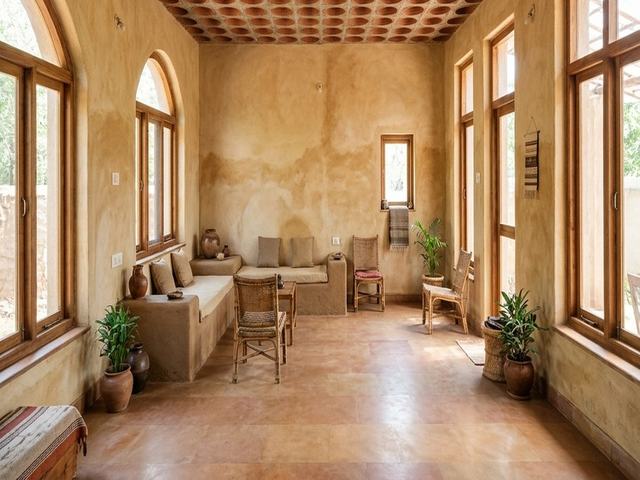
Mud Plastering is a living, breathable wall finish crafted from graded sub-soil clay, sharp silica sand, natural plant fibres, and traditional biopolymers such as fermented Kadukkai (Myrobalan / Terminalia chebula) and jaggery water. Unlike cement plaster that seals walls in a rigid, heat-trapping shell, Sri Auro Bindo Traditional's multi-coat mud plasters actively buffer indoor humidity, absorb acoustic echo, and create serene, tactile interiors.
Supply & coverage: Turnkey Soil Testing, On-Site Mortar Fermentation & Artisan Application across Tamil Nadu, Puducherry, Karnataka, Kerala & Pan-India.
Designs, patterns & colours
Sponge-Floated Warm Terracotta Earth
Velvety matte red-ochre finish showcasing subtle mineral sand grains.
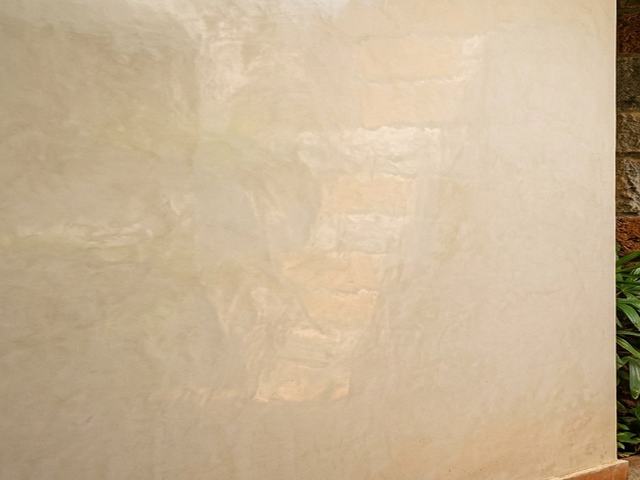
Burnished Fine Clay & Mica Finish
Smooth, hand-troweled interior clay plaster enriched with natural mica flakes that softly catch daylight.
Rustic Straw-Flecked Vernacular Texture
Visible golden chopped paddy straw or hemp fibers celebrating authentic wattle-and-daub / adobe aesthetics.
Natural Earth Pigment Tints
Sienna, Raw Umber, Desert Sand, Kaolin White-Buff, and Soft Olive Earth tones using 100% natural clays.
Raw materials & preparation
Excavated Sub-Soil Rich in Kaolinite/Illite Clay (topsoil with roots/humus is strictly excluded; tested for 20–28% clay content).
Washed Graded River Sand (coarse 2–4 mm sand for base coat; fine 0.5–1 mm sand for finish coat to prevent shrinkage).
Site or quarry sub-soil is tested using the jar sedimentation test and linear shrinkage box test. Clay-to-sand ratios (typically 1 part clay-rich soil to 2.5–3 parts sharp sand) are calibrated so drying test patties show zero cracking.
Soil and sand are sieved, mixed with 10–15 mm chopped straw, and soaked in water with fermented Kadukkai-jaggery extract for 5 to 7 days. Fermentation breaks down clay platelets and releases natural polysaccharides that dramatically increase water resistance and workability.
Step 3: Wall Surface Preparation & Keying
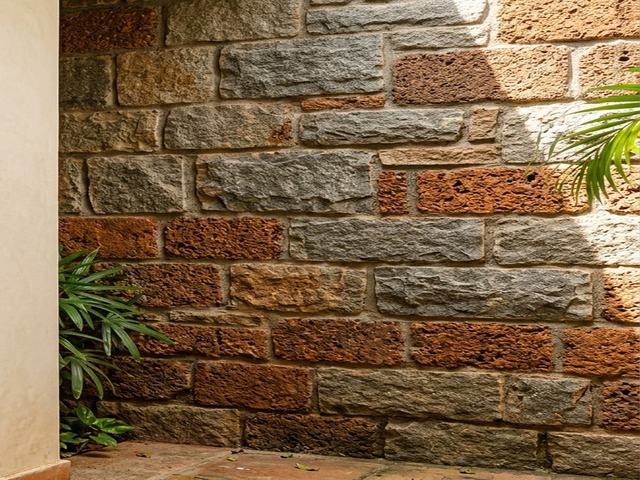
Brick, adobe, CSEB, or stone walls are brushed free of dust, raked at the mortar joints to 10 mm depth for mechanical key, and thoroughly misted with water until damp but not dripping.
Step 4: Mud Slurry Dash Coat (Bonding Key)
A thin clay-sand-lime/cow-dung bonding slurry is dashed forcefully onto the damp wall and left rough to grip the first coat.
Step 5: First-Coat Application (12–15 mm Leveling Body Coat)
Coarse fiber-reinforced mud mortar is applied by hand and wooden darby rule to true up the wall plane, then cross-scratched ('keyed') as it firms up.
Step 6: Second-Coat Application (5–6 mm Fine Finish Coat)
Once the base coat has dried and completed its shrinkage cycle, the wall is misted and the fine-sieved clay-sand-hemp/typha finish coat is floated smoothly with wooden and sponge floats.
Step 7: Final Texturing & Breathable Sealing
Depending on architectural design, the surface is sponge-textured, steel-burnished, or brushed with a breathable casein/lime wash or linseed-beeswax emulsion in high-touch dado zones.
Key advantages
Active Indoor Humidity Buffering: Clay minerals absorb excess indoor moisture when RH > 60% and release it when air turns dry, stabilizing indoor RH between 45% and 55%.
Superior Thermal & Acoustic Comfort: Porous fiber-clay matrix dampens room echo and slows heat transfer.
100% Non-Toxic, Zero-VOC & Biodegradable: Safe for allergy-sensitive occupants; zero chemical fumes.
Effortless Local Repairability: Re-wettable and patchable without stripping entire walls.
Honest limitations
Not Suitable for Direct Unprotected Rain or Shower Splash Zones: Exterior mud plaster requires deep roof overhangs (minimum 600–900 mm), a 450 mm splash-proof stone plinth, and lime/herbal stabilization.
Softer Surface Hardness than Cement: Sharp furniture impacts can dent corners unless rounded bullnose edges are formed.
Longer Multi-Stage Drying Time during Monsoons: Base coat must dry completely before the finish coat is applied.
Health, air quality & environment
Established building science: Building physics research confirms that unpainted 15–20 mm clay plasters act as passive hygric buffers, moderating indoor relative humidity within the 40–60% zone where dust mites, airborne viruses, and mould spores are least active, while emitting zero VOCs.
Traditional perspective: In Indian vernacular building tradition, earthen plasters tempered with herbal Kadukkai and cow dung are revered as 'Sattvic' cooling envelopes that keep sleeping and meditation rooms calm and fresh. We distinguish these cultural traditions from clinical medical claims.
Installation, maintenance & restoration
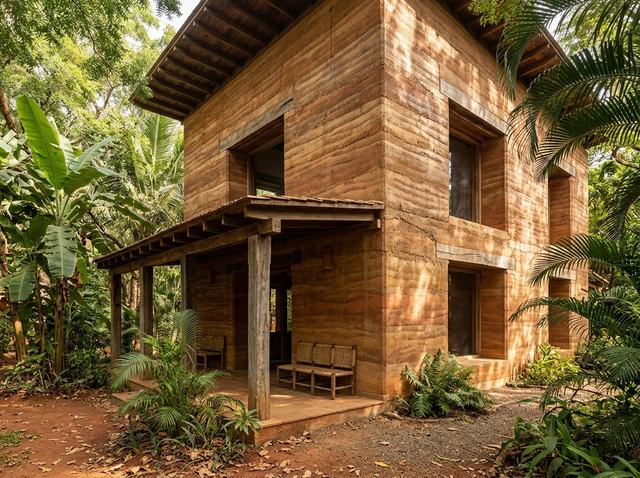
Installation & finishing: Mud plaster can be applied directly onto Adobe, CSEB (Compressed Stabilized Earth Blocks), Rammed Earth, Country Fired Bricks, and Stone walls. Over modern smooth RCC columns or beams, expanded GI chicken wire mesh and a coarse sand-lime spatterdash key coat are installed first to ensure permanent adhesion.
Routine care: Dust walls occasionally with a soft dry brush or microfiber duster. Never wash raw mud plaster with a high-pressure water hose. Scuff marks can be buffed out with a barely damp sponge; deeper nicks are filled with reserved dry finish-mix powder mixed with a splash of water.
Restoration: Mud plaster is the easiest wall finish in the world to repair: if a corner is chipped or an electrical conduit is chased, simply mist the area with water—which re-activates the dry clay binder—and press in fresh matching mud plaster with a sponge float for an invisible repair.
Step-by-step field demonstration of our mud plastering artisans in Auroville preparing 1:2.5 clay-sand mortar with chopped paddy straw and fermented Kadukkai-jaggery extract, wetting the adobe substrate, and floating the breathable 2-coat earth finish.